
“Education is the passport to the future, for tomorrow belongs to those who prepare for it today.” – Malcolm X
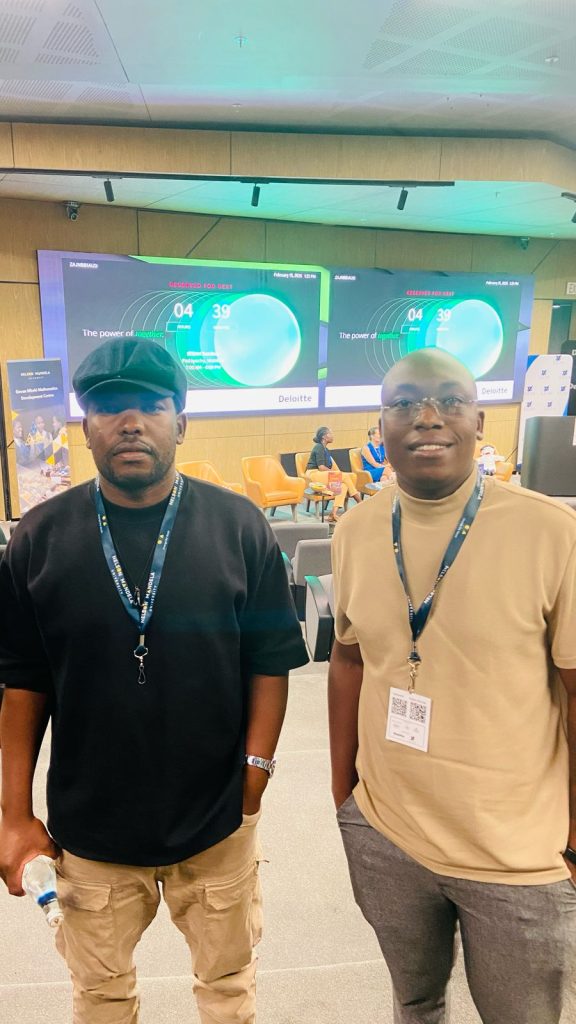
It is the morning of February 14, 2025, and the Deloitte Johannesburg headquarters is alive with energy. The air hums with anticipation as stakeholders from every corner of the education sector gather, exchanging warm handshakes and engaging in conversations that ripple with purpose. Laughter, ideas, and the shared passion for shaping the future of education fill the space. This is more than just an event—it is a movement, a collective commitment to transforming lives through learning.
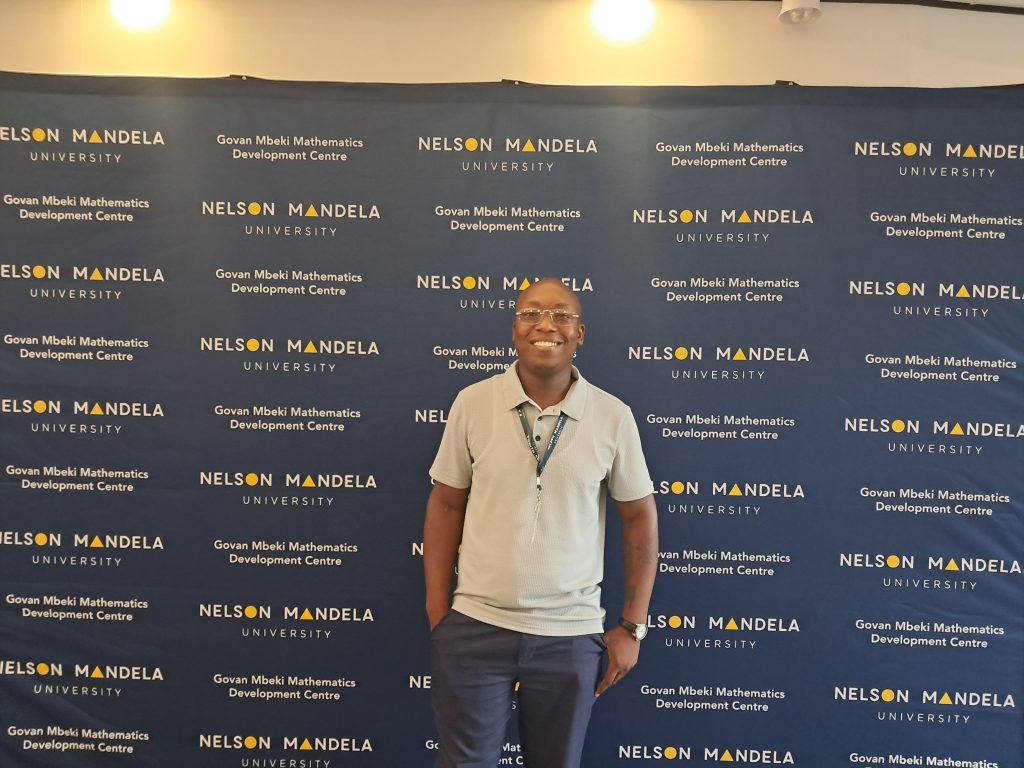
Among the crowd stands Samson Ngomane, a TEACH South Africa Alumni and a dedicated Mathematics educator with over four years of experience in the classroom, he is also one of the facilitators in the TEACH SA Training Academy, training new TEACH SA Ambassadors. Today, his presence is both steady and inspiring, a reflection of his unwavering dedication to his students. Samson is more than just a teacher—he is a problem-solver, a strategist, and a mentor.
With a background as a Data Analyst, he brings a unique perspective to his teaching. Numbers are not just symbols on a board to him; they tell stories, solve mysteries, and unlock doors to the future. His ability to analyse data and break down complex concepts allows him to craft lessons that make mathematics not only understandable but also exciting. His students, many from communities where “taxi math” is a daily reality, quickly realize that numbers are their friends, not foes.
Samson’s motto for the classroom is simple yet profound:
“Don’t make your maths problems other people’s problems—let me help you solve them.”
He knows that math is everywhere—in nature, in business, in the rhythm of daily life. Whether calculating change in a crowded taxi or budgeting for the future, mathematical literacy is a tool for empowerment. And Samson is on a mission to ensure that his students are equipped with that tool.
As the day unfolds at Deloitte, the conversations deepen, the ideas spark, and the commitment to education strengthens. With teachers like Samson leading the charge, the future is in capable hands—because those who prepare today are the architects of tomorrow.

The Gauteng STEAM seminar for educators or colleagues in education was a complete success, especially with fostering collaborations amongst education stakeholders and sparking innovative ideas within the education community. This two day seminar was held at the Deloitte, Johannesburg offices in Midrand it was organized by Deloitte, Nelson MandelaUniversity, Sifiso Ed Tech, GMMDC and Market Place Academy.
The biggest achievement for the seminar was establishing a strong network of educators around Gauteng, creating an environment that will inspire educators and have them support each other. There is a huge pool of great educators within the province, and this is evident in the outstanding results achieved by Gauteng’s Class of 2024.
The province recorded a matric pass rate of 88.4%, the third-highest in the country, reflecting a 3% increase from 2023. Gauteng also achieved 67% Bachelor passes, the second-highest number nationwide.
Top-Performing Districts:
· Johannesburg West led the country with the highest pass rate of 97%.
· Tshwane South followed with an impressive 91.7% pass rate.
· Tshwane North recorded a strong 90.0% pass rate.
· Gauteng North maintained a solid performance with 89.0%.
If we can break the cycle of educators working in isolation and encourage collaboration, idea-sharing, and strategy exchange, even greater success can be achieved. We exchanged contacts with other educators, but if there were a centralized communication platform, this goal would be further strengthened, enabling networking and knowledge-sharing beyond the seminar.
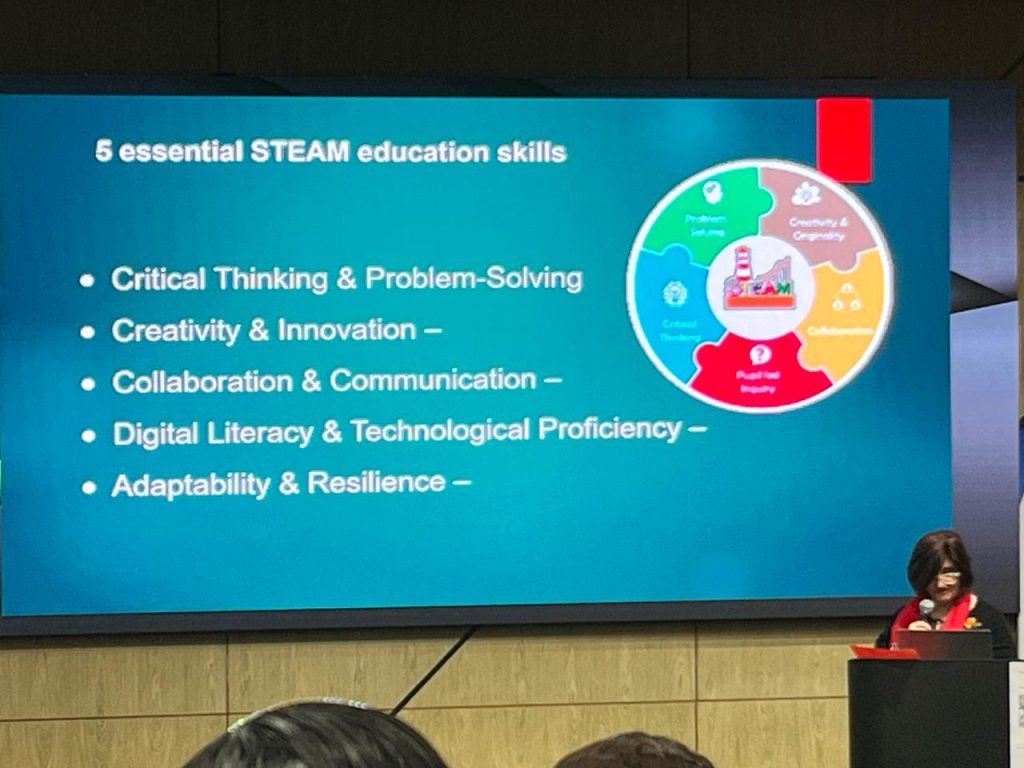
The seminar also focused on introducing educators to innovative approaches within the educational space. In all honesty, today’s world is fast-paced, and our learners are moving with it at an almost similar speed. This makes it crucial for educators to stay ahead of the curve. The reality is that students will use technology, skills, and tools whether we are aware of it or allow them to. It is, therefore, essential for educators to remain informed so that we can guide learners in using these skills, tools, and information in the right way.
Today’s youth are growing up in a time when technology is constantly at their fingertips. Social media applications, internet sites, and instant access to information spark their curiosity, while cell phones, computers, tablets, free Wi-Fi … dominate their daily lives. According to Klopfer et al. (2009), Every day, many students are spending countless hours immersed in popular technologies—This constant engagement with digital tools creates both opportunities and challenges for educators.
Technology is becoming a more prominent form of learning in classrooms, and with the ever-changing digital landscape, teachers must work hard to integrate technology into their instruction. The educators of today are a lot of pressure to provide quality education to students, that is on par with the standards of the 21st century. Those standards include providing students with the technological and informational skills needed to compete in an ever-changing, technology-driven world.
The seminar provided a platform for experts to showcase progressive methods that integrate technology into the classroom, allowing learners to explore, inquire, and engage. More importantly, it fostered a community of collaborative educators to help address and direct these inquiries, ensuring that technology is used to enhance learning rather than distract from it. The following presentations stood out for me:
Ms Mampho Langa – Future Nations Schools
Using curriculum mapping to introduce Project-Based Learning.
Ms Langa brought very practical and beautiful ways in which teaching can be fun and collaborative amongst teachers within the same school. Imagine a single term project for learners that incorporated almost all the subject the learner is doing. This sparked an idea of Technology project in Grade 9, learners have to build a bridge. The calculations and design would be marked and overseen by the mathematics educator, the research and study on how the bridge would save ecosystems, help the environment would be overseen by the Natural Science educator, the finance (cost, budget, raising of funds) would be overseen by the EMS educator. The aesthetics and creativity would be overseen by the Creative Arts educator. The social impact of the bridge to the surrounding communities would be overseen by the Social Sciences educator. The materials needed and actual build would be overseen by the Technology educator. The write-up and presentation would be overseen by the Languages educator. This is one project and overseen by seven educators which means learners would be getting support from seven educators and which ever subject they love the most is part of the project. This is the power of collaborations and teaching learners how everything they are learning is connected.
Prof Jean Greyling – NMU and Tengible Coding
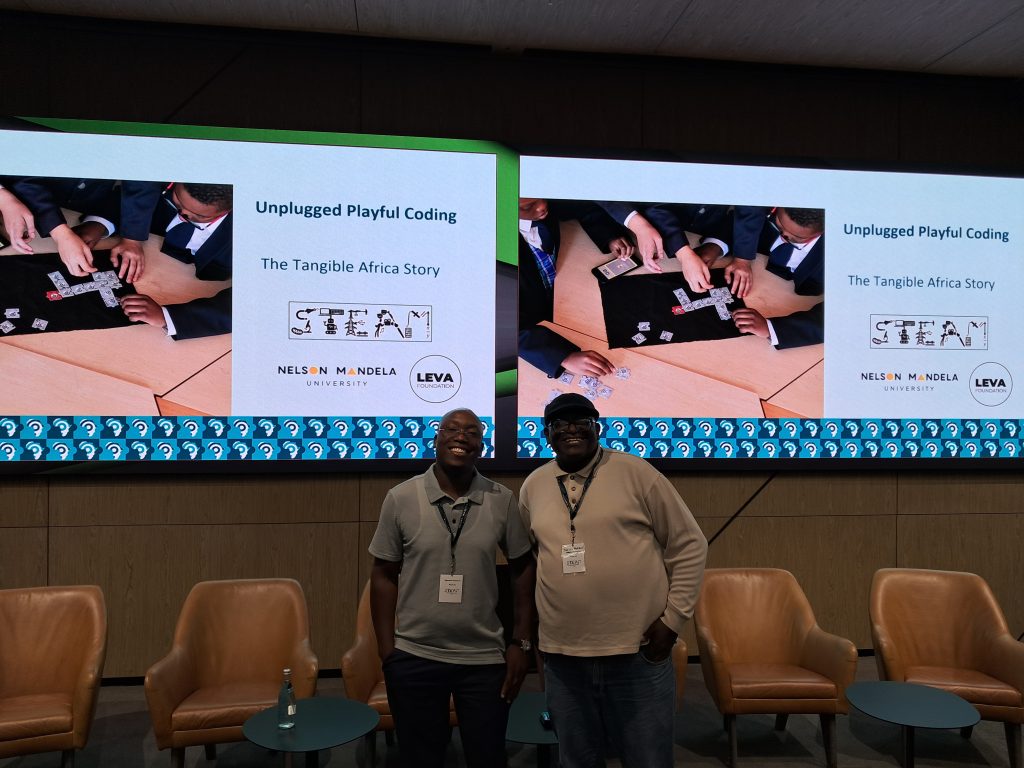
Unplugged Playful Coding
There is a huge fear in coding and robotics especially to a child who can’t even operate a simple computer. I had the same fear but I can secretly say that I am actually enjoying playful coding from the sample I got from Prof Greyling. I started playing with it so I would know the best way to present and spark interest from my learners, but I fell in love with coding again and wonder what happened to the fear of coding I developed during my tertiary days. It is practical and many people wouldn’t believe you don’t even need a computer. This was an eye opener and I can proudly say I play the coding with a group of my learners many times of the week.
Parallel Sessions
We also had sessions where we split with regards to our respective subject fields. I was in the Math group and Wow, it was an eye opener and a great way to connect with the fellow Mathematics educators within the province.
I was introduced to APPLETS, always knew what they are but these ones are created to make teaching and learning very fun and easy. I can safely say that I use them to introduce topics, reteach and spark interest within learners.
This seminar wasn’t just another event—it was an experience that transformed how I see education. I did not have to worry about taking notes or recording sessions—all resources were shared with us, allowing me to fully engage, absorb, and apply what I learned.
If there’s one takeaway, it’s this: Collaboration is the future of education. When educators share, innovate, and support one another, we create a ripple effect that empowers not just teachers, but entire generations of learners.
This seminar should happen more than once a year because its impact extends far beyond a single day. I left feeling inspired, energized, and ready to bring these ideas into my classroom. And that’s the true power of education.
Klopfer, E., Haas, J. and Groff, J. (2015) Using the technology of today, in the classroom today: The instructional power of digital games, simulations and social networking, and how teachers can leverage it, Academia.edu. Available at: https://www.academia.edu/707605/Using_the_Technology_of_Today_in_the_Classroom_Today_The_Instructional_Power_of_Digital_Games_Simulations_and_Social_Networking_and_How_Teachers_Can_Leverage_It (Accessed: 10 March 2025).